
Formula 1 is a high-performance sport with some of the most advanced cars seen in the history of motorsport. From raging engines to the sheer speed of one of these cars, it is a sport laced with passion and innovation.
Recently, the FIA announced new regulations for the 2026 season that compartmentalize and redefine various aspects of the car to meet newer standards. These regulations are meant to make the sport more competitive and sustainable among all else. Let’s get into each new regulation and what it means for 2026.
- The cars will essentially be smaller.
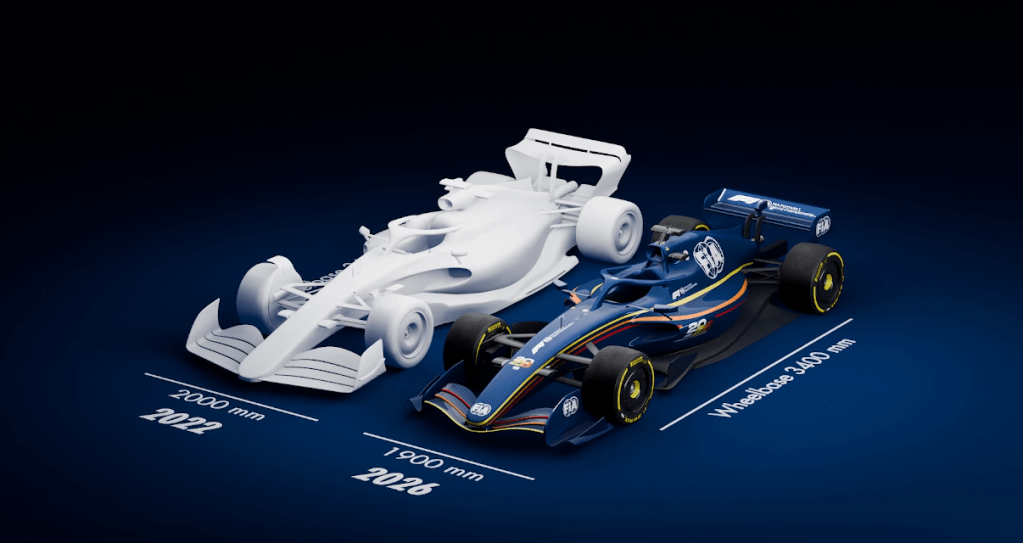
via Professional Motorsport World
2026 cars will feature a reduced length of 3400mm and reduced width of 1900: reduced by 200mm and 100mm respectively. The cars are also lighter by 30kg with reduced downforce and drag by a combined percentage of 85.
This means the cars will be more swift, allowing for quicker changes in direction and improved maneuverability in tight corners. Furthermore, a 30% reduction in downforce will decrease the cars’ ability to grip the track through aerodynamics, reducing cornering speeds. A 55% reduction in drag will reduce resistance against the car, potentially increasing top speeds on straight sections of the track.
- Hybrid power unit that will increase speeds while being sustainable.

via Lucas di Grassi LinkedIn
A drop is seen in the kilowatts of power to the rise in the kilowatts of the battery. From a max of 560kw to, in 2026, 400kw, the battery power will rise by 300% from 120kw to 250kw. Braking energy is also doubled.
Although the power from the hybrid unit has decreased from 550-560 kW to 400 kW, the more significant role of the battery power may lead to a more balanced and efficient power delivery system. The combined effect of the internal combustion engine and the electric motor could result in a more optimized and seamless power output.
With the increase in battery power from 120 kW to 350 kW, there will be a significant boost in the electric component of the hybrid units. This should result in improved acceleration and possibly better overall lap times, as the electric power can be utilized more effectively during high-demand situations such as overtaking and corner exits with the improved braking energy reducing need for energy-saving strategies.
- New active aerodynamic system where the front and rear wings can be moved to fit a team’s strategy.
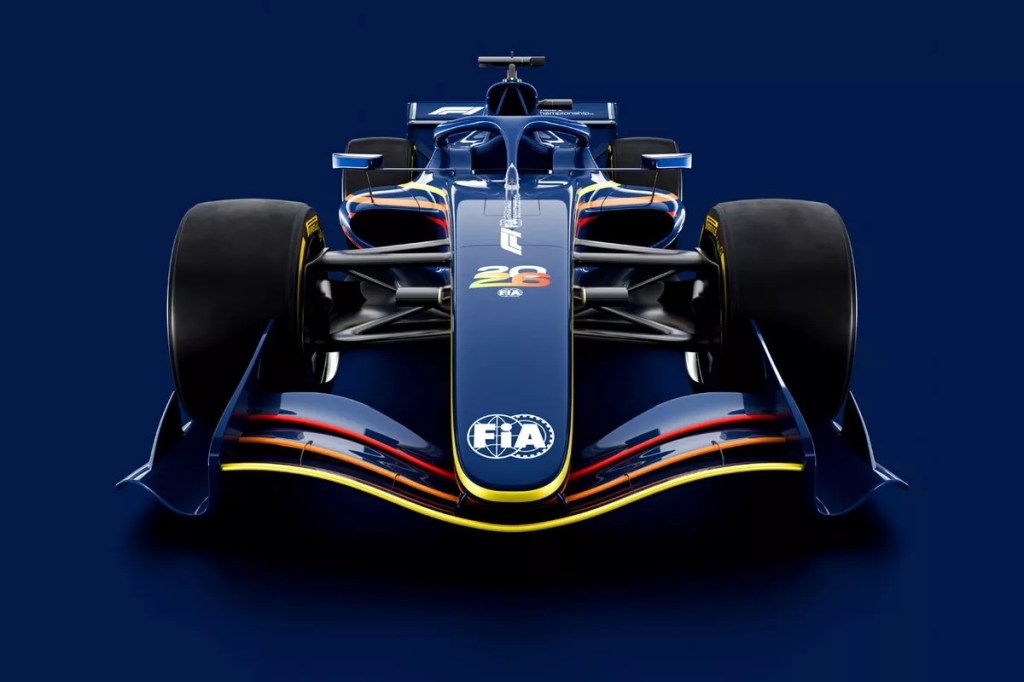
via FIA
Drivers may have more strategic options during races, choosing between optimal straight-line speed for overtaking and enhanced cornering abilities to defend or attack in turns.
Also, the introduction of switchable configurations for minimizing fuel consumption versus maximizing cornering performance suggests that cars will be more adaptable to different racing conditions. This could lead to faster lap times and more competitive racing as teams optimize their strategy based on track characteristics and race situations.
- DRS but as battery power.
With DRS, drivers are given reduced drag to overtake cars if they are within one second of it. Similarly, extra battery power will be provided to drivers within one second of another driver for enhanced and increased overtaking.
What this means for racing in 2026 is that it could influence battery management strategies, focusing on optimizing energy use during overtaking maneuvers to balance performance and range considerations.
It will be interesting to see how DRS and enhanced battery power will perform together or if one of them will be removed completely.
- Improved safety

via Professional Motorsport World
The two-stage nose design is expected to reduce the risk of detachment during initial impacts, thereby enhancing driver safety and potentially reducing the severity of accidents.
Car manufacturers and teams will need to innovate to comply with these new regulations, likely leading to advancements in materials science, engineering design, and manufacturing processes aimed at meeting the new safety standards without compromising performance. This will be exceptionally difficult for teams with low budgets as they now have to take in more factors while attempting to develop their 2026 car.
- Sustainability
These new power units will comprise of only sustainable fuels introduced by ARAMCO. Carbon emissions will be drastically reduced with carbon to be acquired through existing means. Additionally, power units will become 50% electrical, further displaying Formula 1’s commitment to sustainability.
Additionally, cobalt, essentially used to manufacture certain parts of a car, will be 100% recycled.
All things considered, F1 is ready to introduce new autosport innovations regarding speed, strategy, safety, and sustainability, promising an exciting era for motorsport enthusiasts worldwide. These changes will either develop motorsports into something never seen before, or have it waver until it is rectified.
Sources:
- F1. (2024). FIA unveils Formula 1 regulations for 2026 and beyond. Retrieved from https://www.formula1.com/en/latest/article/fia-unveils-formula-1-regulations-for-2026-and-beyond-featuring-more-agile.75qJiYOHXgeJqsVQtDr2UB
- F1. (2022). 7 things you need to know about the 2026 F1 engine regulations: Formula 1®. Retrieved from https://www.formula1.com/en/latest/article/more-efficient-less-fuel-and-carbon-net-zero-7-things-you-need-to-know-about.ZhtzvU3cPCv8QO7jtFxQR
 107 Pursuit
Leave a comment