
Since the introduction of the hybrid power unit in motorsport, this cutting-edge technology attributes to every single millisecond toward the performance of the car. These units have set new standards for performance and efficiency through these sports amongst many others.
Introduction & Components
How do Hybrid Power Units (HPUs) differ from Internal Combustion Engines (ICE)? A hybrid power unit is a combination of an internal combustion engine and one or more electric motors, that work together to deliver power to the wheels. This working system between gasoline and electricity is not only powerful but also more efficient.
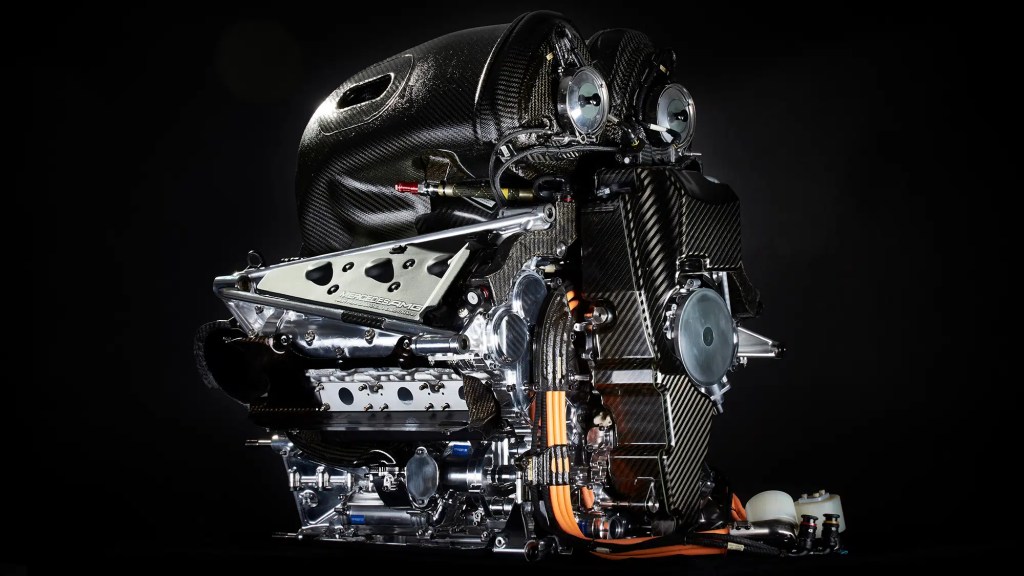
These units allow teams to maximize their performance while adhering to strict environmental regulations. The ICE of the unit remains a critical source of power, delivering the high performance that racing is known for while creating a more active powertrain.
One of the most significant advantages of hybrid power units is the ability to deliver a power boost through the electric motors. This additional power is particularly useful during acceleration and overtaking which gives drivers an increased advantage during a race. These systems increase fuel efficiency, dropping fuel consumption by 30% since 2014 to 2020.
The electric motor/generator units, commonly referred to as MGU-K and MGU-H, revolutionized how these cars regulate power. The Motor Generator Unit-Kinetic. MGU-K recovers energy during braking, converting kinetic energy into electrical energy that can be stored in the battery.
On the other hand, the Motor Generator Unit-Heat (MGU-H) recovers energy from the exhaust gases, helping to improve overall efficiency.
Remaining energy from these two units are stored in a high-capacity lithium-ion battery that provides more energy specifically during maneuvers, making this a key aspect of race strategy.
Lastly, a turbocharger works in conjunction with the hybrid system to boost power output. By compressing the air entering the engine, a turbocharger allows more fuel to be burned, increasing the engine’s power. In hybrid systems, the turbocharger is often paired with the MGU-H to optimize energy recovery and performance.
Performance
One of the most significant advantages of hybrid power units is the ability to deliver a power boost through the electric motors. This additional power is particularly useful during acceleration and overtaking.
Hybrid systems also enhance fuel efficiency, a crucial factor in endurance racing and series like Formula 1, where fuel limits are imposed. By recovering and reusing energy that would otherwise be wasted, hybrid power units allow teams to maximize performance while minimizing fuel consumption.
Regenerative braking is a key aspect of hybrid technology. By converting braking energy into electrical energy, hybrid power units not only improve efficiency but also reduce the wear and tear on mechanical brakes, contributing to the car’s overall durability.
Pit stop strategy is also attributed to the power units where teams may opt for fewer pit stops, allowing for a more aggressive race pace.
Case Study: Mercedes-AMG PETRONAS F1 Team
From the moment the hybrid era began in 2014, Mercedes-AMG emerged as the dominant force in Formula 1. The team’s power unit was significantly more efficient and powerful than those of its rivals, allowing Mercedes to achieve a level of performance that was unmatched on the grid.
In the 2014 season, Mercedes-AMG won 16 out of 19 races, with drivers Lewis Hamilton and Nico Rosberg finishing first and second in the Drivers’ Championship, respectively. This dominance was not just about raw power but also the efficiency and reliability of the Mercedes hybrid system, which allowed them to manage fuel consumption, energy recovery, and deployment more effectively than any other team.

It was also rumored these technological advancements were revealed to Lewis Hamilton to incentivize him to make the switch from McLaren to Mercedes.
As the motorsport world continues to evolve, the lessons learned from hybrid power units will undoubtedly influence the next generation of racing and road cars alike that will be seen in F1 through their 2026 regulations.
To learn more about 2026 Formula 1 Regulations, click here.
For more information regarding motorsport: visit 107pursuit on socials!
 107 Pursuit
Leave a comment